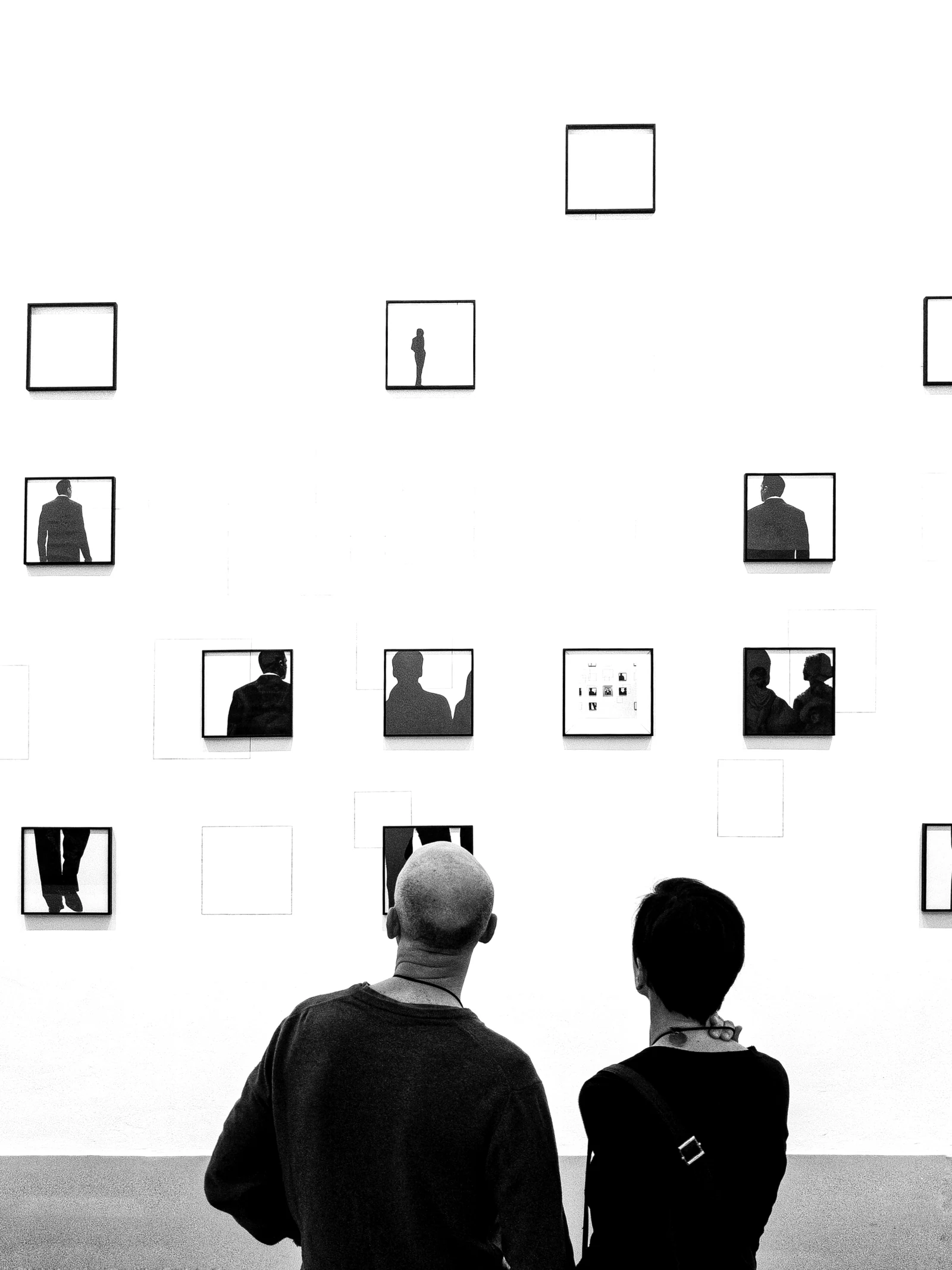
Give another person a useful way into the work
A feedback conversation becomes more generous when the maker explains what they are trying to understand. A draft film, a sequence of photographs, or an unfinished installation may each need a different kind of attention. Naming the question allows peers to respond to the work at its current stage.
The maker can begin by saying what is open for discussion and what kind of response would be useful. That invitation gives the group a shared purpose and helps the conversation stay close to the work.
Describe before prescribing
Begin with what you observe. Explain where your attention goes, what you understand, and where you become uncertain. This gives the maker information about the encounter with the work. It also makes your response easier to evaluate than a statement that the work simply succeeds or fails.
Distinguish observation from interpretation. “I read this transition as a change in time” is different from asserting that the artist intended it. A creative can learn from an unexpected reading without being required to adopt it. The conversation becomes more productive when uncertainty can remain visible.
Offer a question before a solution
A suggested change can be helpful, but it can also replace the maker’s question with the reviewer’s preferences. Explain the issue you are trying to address before proposing an answer. Ask what would happen if the sequence, scale, pace, or framing changed.
In a hypothetical discussion of a film excerpt, a designer might notice a visual pattern the filmmaker had not foregrounded. That observation can be useful without the designer becoming the authority on how the film should be edited. Different expertise expands the conversation when its limits are understood.
A simple sequence for a thoughtful critique
Start with a period of attention to the work. Then invite participants to describe what they noticed before offering interpretations. The maker can listen for the qualities that are arriving clearly and the points where the experience differs from their intention.
Next return to the maker's question. For a hypothetical photographic sequence, the question might concern how the transition between two groups of images affects the reading. A peer can describe where their attention changed and explain why. Another may offer a different experience. The maker receives observations they can test rather than a single verdict.
End by identifying one or two experiments the maker wants to try. A revised order, a shorter passage, or a different presentation can turn the conversation into a useful next action. Returning with that experiment allows the group to develop a more precise understanding over time.
Receive feedback without surrendering authorship
The maker does not need to accept every suggestion. Look for repeated observations, unexpected interpretations, and questions that connect to your own concerns. Separate a comment that reveals something useful from one that simply proposes a different work.
After the session, write down a few things to test rather than attempting to apply everything immediately. If the feedback was unclear, ask a follow-up question. A useful critique should leave the creative with more understanding and agency, not with an obligation to satisfy the group.
Make the exchange safe enough for unfinished work
Agree how material will be treated, including whether it may be shared or discussed outside the group. Ask before recording, photographing, or introducing the work to someone else. These expectations allow people to choose what they are comfortable bringing into the conversation.
The maker retains authorship and decides which suggestions to pursue. A good critique expands their understanding of the work and their available choices. It can strengthen both the project and the quality of the relationships around it.
A culture of return
Repeated exchange allows people to understand how a practice develops. They can notice a persistent question or a meaningful change that a one-time reviewer might miss. That continuity is one expression of Velaharra’s Creative Proximity philosophy.
The Cultural Platform is designed to support exchange and professional learning across disciplines. Group discussion is distinct from an individually scoped advisory service or representation relationship. Each can be useful when the format is clear. Good feedback is a contribution to the work, and it becomes more valuable when people know why they have been invited to give it.